You Can Implement Technology. But Can You Implement Change?
Why the human side of digital transformation deserves just as much attention as the technology itself.
By Partners Plus Consultancy ·
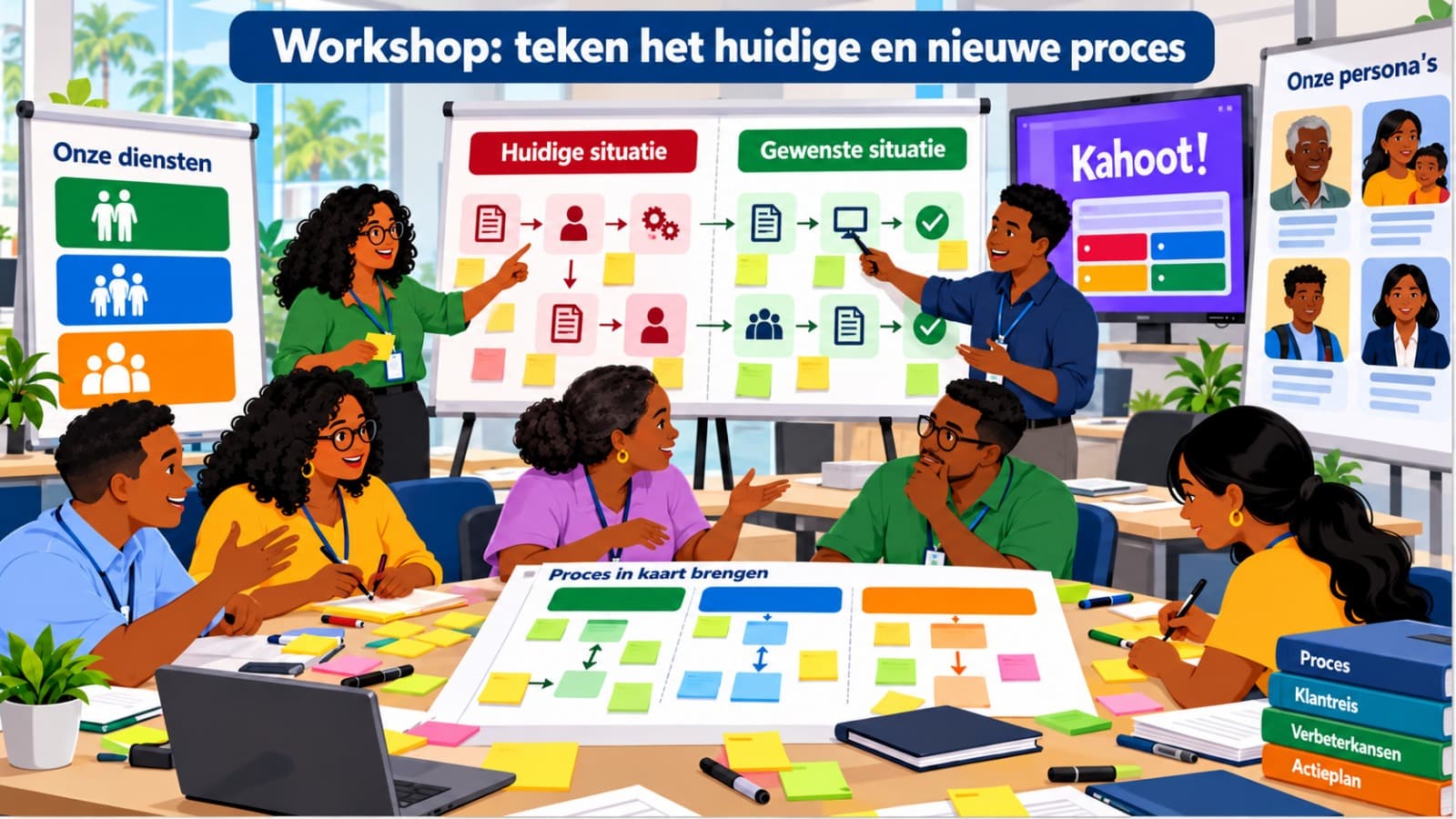
Technology is changing the way we work, communicate, and deliver services. From automation and digital platforms to artificial intelligence, organizations are investing in solutions that promise greater efficiency, transparency, and accessibility.
But there is a question we should be asking more often:
Are we investing as much in the people who must embrace these changes as we are in the technology itself?
Because while technology can be implemented, meaningful change cannot simply be installed.
And that is where the real transformation begins.
When twenty years of ambition meet the reality of change
“After 20 years, this is finally becoming a reality.”
These words were shared during a digital transformation project involving a government ministry in Suriname, where Partners Plus Consultancy has been supporting the change management process.
For us, this statement represented more than progress on a technology project. It reflected years of ambition, organizational challenges, and the importance of bringing the right people together to turn an idea into meaningful action.
The project was driven by clear objectives: improving public services, reducing costs, strengthening transparency, and making government services more accessible to citizens.
However, achieving these objectives requires more than developing a digital application.
It requires understanding the organization, its people, its culture, and the expectations of everyone involved.
Our involvement began with understanding the ministry's needs and the broader organizational environment. Through discussions with management, the Minister, and various stakeholders, we worked to understand not only what needed to change, but also what would be required to make that change sustainable.
In close collaboration with the consultant responsible for developing the application, stakeholder sessions helped connect technological development with organizational realities.
Because ultimately, a digital solution must work for the people using it, not the other way around.
Change management is not a training session
One of the most common misconceptions surrounding digital transformation is that change management begins when a new system is ready to launch.
Employees receive training, instructions are distributed, and the organization is expected to adapt.
But change management is much more than preparing people to operate a new application.
It starts with understanding their perspectives.
Do employees understand why the change is necessary? Are leaders actively supporting the transformation? Do people feel involved in decisions that affect their work? And perhaps most importantly, what happens when established routines, expectations, and organizational cultures are challenged?
These questions cannot be answered by technology alone.
At Partners Plus Consultancy, we approach change management as an integral part of organizational transformation. We consider leadership, communication, stakeholder engagement, organizational readiness, and behavioral change as interconnected elements.
For this project, we also identified internal change agents: individuals within the ministry who can help colleagues navigate uncertainty, encourage participation, and build confidence in new ways of working.
Their role is particularly important because sustainable transformation requires ownership from within the organization.
External consultants can guide the process. Technology providers can develop the systems. But the organization itself must ultimately carry the change forward.
Global knowledge, local understanding
Change management is supported by decades of academic research and established organizational frameworks. These models offer valuable insights into how people respond to change and how organizations can support successful transitions.
However, frameworks are not universal solutions.
An approach that works in one country, organization, or industry may need significant adjustment in another.
Within the Surinamese context, organizational structures, communication practices, cultural expectations, and stakeholder relationships all influence how change is experienced.
Our approach therefore combines evidence-based change management principles with local knowledge and an understanding of the specific people and organizations involved.
The objective is not simply to apply a model correctly.
It is to make the model relevant to the people it is intended to support.
This becomes even more important when digital transformation affects public services. The end users are not only employees within the organization, but also citizens with different levels of digital literacy, access to technology, and expectations of government services.
A successful digital platform must therefore be more than technically functional. It must also be understandable, accessible, and trusted.
Leadership sets the direction. People create the movement.
Successful digital transformation requires leaders who do more than approve budgets and implementation plans.
It requires leaders who communicate a clear purpose, remain engaged throughout the transformation, listen to concerns, and create an environment in which people feel supported.
Equally important is recognizing that resistance to change is not always unwillingness. Sometimes it reflects uncertainty, insufficient information, previous experiences, or legitimate concerns about how the change will affect daily work.
Listening to these concerns is not a delay in the transformation process.
It is part of making the transformation successful.
When people understand the purpose of change, see its relevance, and feel that their perspectives matter, they are better positioned to contribute to its success.
The future of digital transformation is human
As Suriname continues its digital development, both public and private organizations face opportunities to modernize processes, improve services, and strengthen their competitiveness.
The technology will continue to evolve. New platforms, automation, and artificial intelligence will create possibilities that were difficult to imagine only a few years ago.
Yet one principle will remain relevant:
The success of digital transformation should not be measured only by the systems we implement, but also by the value those systems create for people.
For ICT professionals, this requires looking beyond technical delivery. For organizational leaders, it means treating change management as a strategic responsibility rather than an activity added toward the end of implementation.
And for consultants, it means understanding that meaningful transformation begins with listening, collaboration, and a genuine appreciation of the people involved.
At Partners Plus Consultancy, this is the perspective we bring to digital transformation projects across the public and private sectors: connecting strategy, technology, processes, and people to support meaningful and sustainable change.
Because ultimately, the most important question is not simply whether an organization is ready for new technology.
It is whether we are preparing people to move forward with it.
“Technology enables progress. People give it purpose.”
About Partners Plus Consultancy
Partners Plus Consultancy supports public and private organizations in navigating strategic and organizational transformation, with expertise in change management, stakeholder engagement, and digital transformation. Through an evidence-based, people-centered approach, we help organizations translate change into sustainable organizational value.
Schedule a Conversation